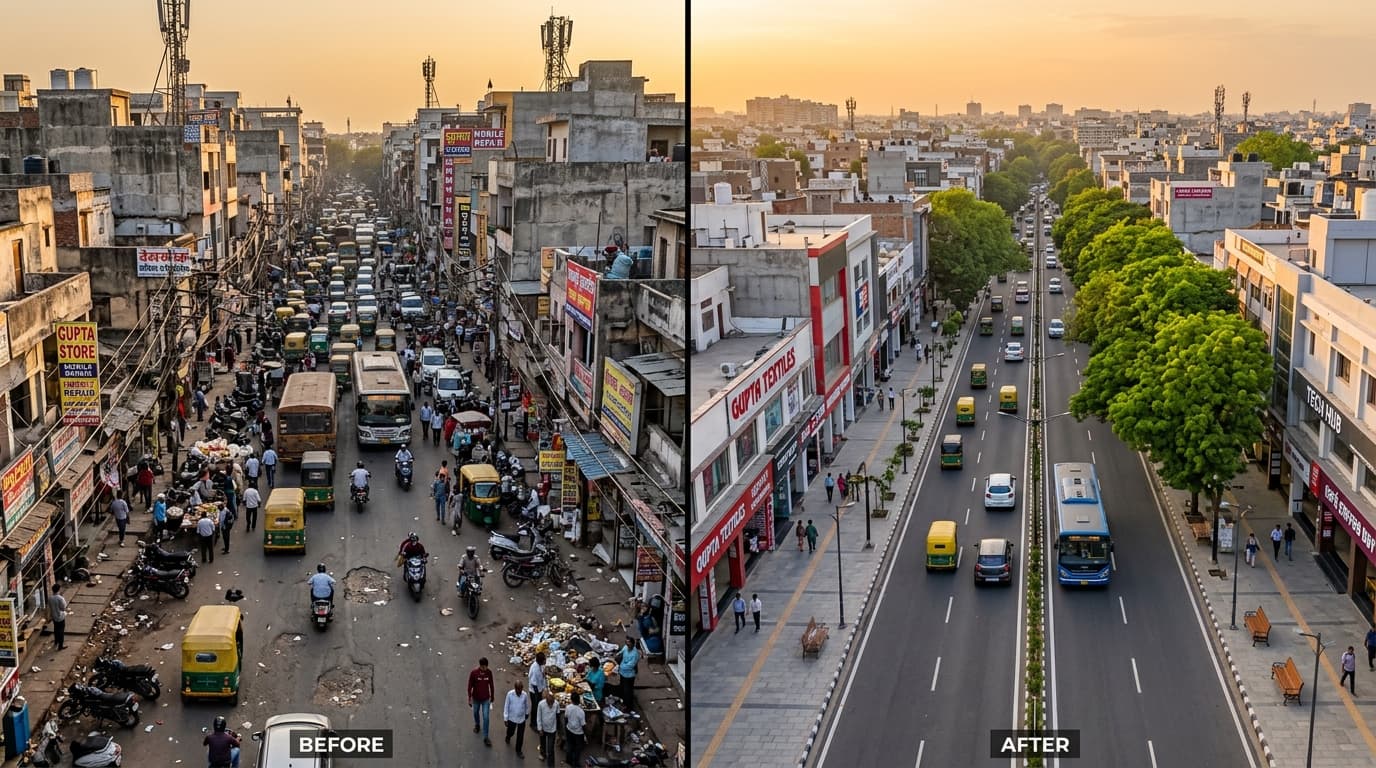
Surat overcame a plague. Indore became India’s cleanest city. Pune redesigned its streets for citizens. These turnarounds weren't luck—they were systems. Discover the before-and-after blueprint behind Indian urban transformation, and how architecture firms can apply the same coordination logic to their projects.
In 40 years, China moved 500 million people from villages to cities. Here is exactly how they did it — and what every Indian architect, urban planner, and developer needs to understand about the fastest urban transformation in human history.
Indian architecture firms using AI are presenting more options, winning more clients, and leaving by 5:30 PM. Here's exactly which tools they're using and how to start.
Most Indian buildings fight the climate. The best ones work with it. Here is everything architects and developers need to know — with real examples, verified standards, and why it matters more now than ever.
It's not the contractor's fault. It's not the client's fault. It's a systems problem — and it has a very specific solution.
Walk into any architecture or interior design firm in India — Ahmedabad, Pune, Hyderabad, or Tier-2 cities like Indore and Surat — and you'll find the same scene: three phones, five WhatsApp groups, and a project manager scrolling through 800 unread messages trying to find one approval that came in "sometime last Tuesday."
Indian footpaths are an afterthought. European and Asian cities treat them as infrastructure. This is the design, policy, and execution gap that explains everything — and what Indian cities can actually do about it.
The three most debated design tools in Indian architecture — compared honestly. Pricing in rupees, real learning curves, team size fit, and a clear verdict for every firm type.
Discover how architecture and construction professionals across India are using digital collaboration platforms to streamline workflows, reduce rework, and deliver projects faster — with real strategies you can apply today.